Review: Funny SVG Cut Files Bundle for Embroidery
As a designer who spends half my life digitizing and the other half stitching, I have learned that not every cute graphic translates well to thread. We often browse marketplaces looking for the next big seller, only to find files that look great on a screen but turn into a tangled mess under the needle. Recently, I downloaded the Funny SVG Cut Files Bundle to see if it holds up in a real-world production environment. This isn’t just about whether the lines are clean; it is about whether these assets can survive the transition from digital Graphics to tangible, stitched reality.
First Impressions and Visual Personality
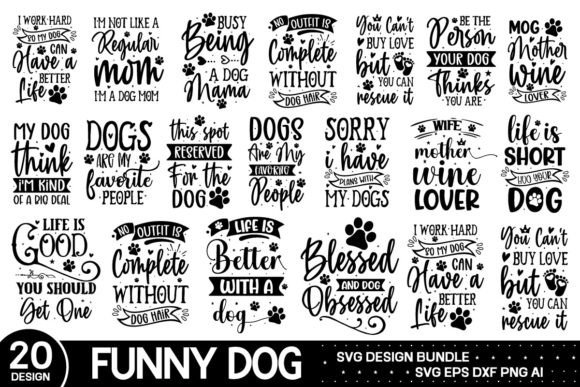
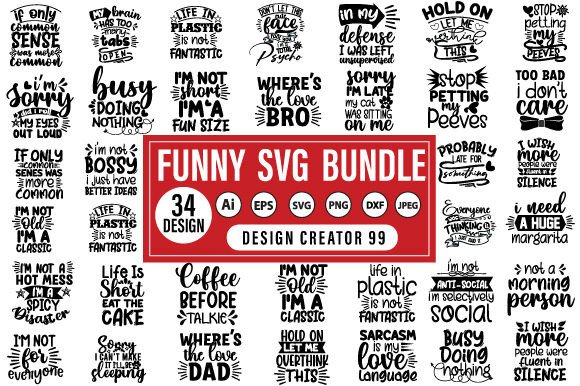
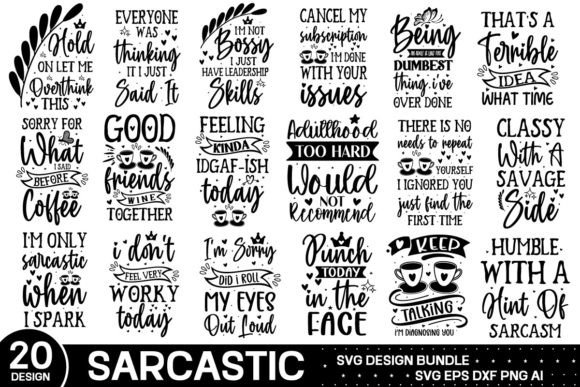
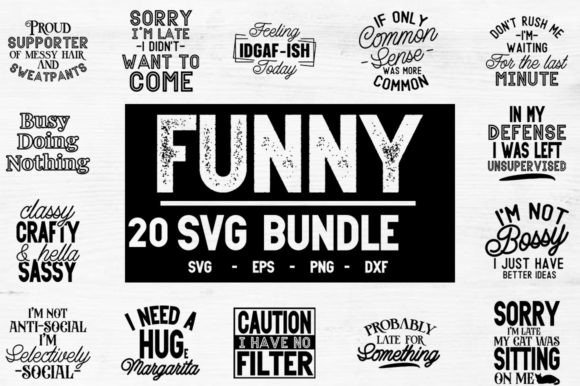
When I first unzipped the folder, the variety stood out. You receive a zip file with 20 SVG, 20 PNG, 20 EPS, and 20 DXF files. For an embroidery professional, the presence of vector formats like SVG and EPS is crucial. It means I am not stuck with a fixed pixel dimension. The description notes "Quality work, 100 vector file" and "Every Vector Resizable 300 DPI Resolution In CMYK Col." While CMYK is a print color space and embroidery uses thread charts, having high-resolution source files allows me to manipulate the shapes before I even open my digitizing software.
The mood of this bundle is lighthearted and approachable. These designs do not take themselves too seriously, which makes them perfect for the current market trend of whimsical, personality-driven apparel. However, "funny" can sometimes mean cluttered. My immediate concern was detail density. Are there tiny elements that will break under a satin stitch? Are the lines smooth enough for a clean running stitch outline? Upon closer inspection, the shapes are bold and relatively simple, which is a good sign for stitchability.
Real-World Application: The Tote Bag Test
To test the practical value, I decided to use one of the designs for a custom embroidered tote bag. This is a staple item for any Etsy seller or craft fair vendor. I chose a design with moderate complexity to see how it handled the textured weave of canvas fabric. Since these are cut files and not pre-digitized embroidery files, I had to convert the SVG into a stitch file myself. This is where the quality of the vector matters. Clean paths mean fewer nodes to edit, resulting in a smoother digitizing process.
The result was promising. The bold lines translated well into fill stitches, and the lack of excessive micro-details meant the design did not pucker the fabric. For a handmade product intended for daily use, durability is key. A design that is too dense will make the fabric stiff and uncomfortable. This bundle’s aesthetic leans toward open, airy compositions, which is ideal for items like tote bag design projects or lightweight sweatshirt embroidery where you want the garment to remain soft.
Navigating Fabric and Hoop Constraints
While the designs are versatile, they are not universal. I would exercise caution when using these on stretchy fabrics or very thin materials without proper stabilization. The vector nature allows resizing, but shrinking a design too much for a small hoop size can cause stitch density issues. If you reduce a complex shape to fit a 4x4 hoop, the stitches may become too close together, leading to thread breaks or fabric distortion.
Similarly, consider the background. These designs rely on clear silhouettes. On dark or textured fabrics, you must ensure high contrast with your thread colors. A light-colored thread on a dark navy sweatshirt will pop, but if the design has internal details that are too fine, they might get lost in the fabric texture. Always test on scrap fabric first. Check how the design behaves with your specific stabilizer choice. For caps or curved surfaces, the simplicity of these graphics is an advantage, as complex curves are harder to align perfectly on a rounded surface.
Commercial Viability and Brand Consistency
For commercial embroidery professionals and small shop product creators, consistency is vital. This bundle offers a cohesive style that can help build brand recognition. If you are creating a line of personalized gift items, such as baby clothes or holiday decor, having a set of matching graphics allows you to create collections rather than one-off items. This increases perceived value and encourages bulk purchases from customers.
However, remember that these are design assets, not finished embroidery files. You must digitize them or hire someone who can. This adds a step to your workflow but also gives you control over stitch types. You can choose a satin stitch for borders to give a premium look or a running stitch for a rustic, hand-drawn feel. This flexibility is a major pro for designers who want their finished product to stand out from generic, auto-digitized items.
Practical Designer Notes
Before you commit to producing inventory, keep these technical considerations in mind:
- Verify Licensing: The product description mentions commercial use potential, but always double-check the specific license terms included in the download. Ensure you are allowed to sell physical items made with these designs.
- Test Stitch Density: When converting vectors to embroidery, adjust your density settings. High-density fills can cause puckering on lightweight fabrics like those used for baby embroidery or kitchen towels.
- Check Small Details: Zoom in on the vector paths. If there are anchor points that create sharp, unnatural angles, smooth them out in your vector software before digitizing to prevent needle jumps.
- Mockup in Black and White: Remove color to check the silhouette. If the design loses its meaning without color, it may be too reliant on shading rather than shape, which is difficult to replicate in thread.
- Fabric Compatibility: These designs work best on stable woven fabrics or medium-weight knits. Be cautious with sheer or highly textured materials where stitch definition might be compromised.
Final Verdict
The Funny SVG Cut Files Bundle is a solid resource for designers who understand the bridge between vector graphics and textile art. It is not a plug-and-play solution for those without digitizing skills, but for those who do, it provides excellent raw material. The clean lines and playful themes fit well within the current Crafts market, appealing to buyers looking for humor and charm in their custom apparel and home goods.
If you are an embroidery project enthusiast or a business owner looking to expand your catalog with fresh, editable assets, this bundle offers good value. Just remember that the final quality depends on your digitizing choices, hoop selection, and material testing. Treat these files as a starting point, not the finish line, and you will create products that customers love to wear and gift.