Queen Bee SVG: A Designer’s Review for Embroidery
As a designer who spends half my life digitizing and the other half stitching, I have learned that not every cute graphic translates well to thread. When I first pulled up You Can Call Me Queen Bee Funny Svg, I was looking past the humor to see the structural integrity. We all know that what looks crisp on a screen can turn into a tangled mess under the needle if the lines are too thin or the spacing is off. This review breaks down how this specific design holds up when moved from digital Graphics to tangible Crafts, focusing on real-world application for those of us running small shops or making personalized gifts.
First Impressions and Visual Personality
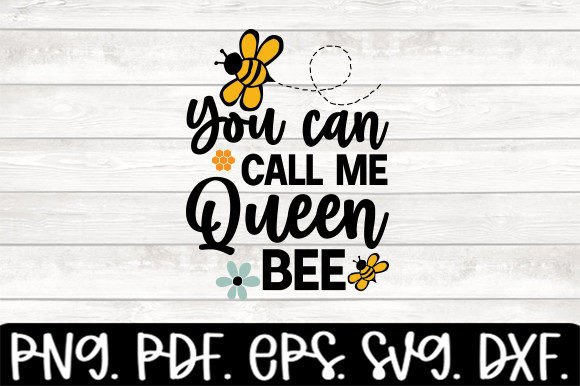
The immediate vibe of this design is confident and playful. The phrase "You Can Call Me Queen Bee" carries a bold attitude, which is perfect for customers who want their apparel to speak for them. Visually, the layout feels balanced. For an embroidery project, balance is critical because uneven weight distribution can cause puckering, especially on stretchy fabrics like jersey knits. The typography appears sturdy enough to withstand the compression of stitching, avoiding those hairline serifs that often break or look messy when stitched out at smaller sizes.
I appreciate that the package includes multiple formats. Having the SVG and EPS files means I can adjust the scale without losing quality before sending it to my digitizing software or using it as a reference for manual adjustments. The PNG with a transparent background is a lifesaver for creating quick printable mockup previews for my Etsy listings, allowing me to visualize the design on different garment colors without firing up the machine.
Real-World Application: From Screen to Stitch
To truly test You Can Call Me Queen Bee Funny Svg, I imagined it on a few standard items I frequently produce for clients. The most natural fit is a custom tote bag. Canvas has a tight weave that supports text well, and the humorous tone matches the casual utility of a grocery or beach bag. Here, the design would likely need a moderate stitch density to ensure the letters remain legible from a distance. A simple running stitch outline might get lost, so I would recommend a light fill stitch or a bold satin stitch border depending on the size.
Another strong contender is sweatshirt embroidery. Hoodies and crewnecks are thick, requiring a robust design that doesn’t get swallowed by the fleece. The "Queen Bee" theme works wonderfully here for boutique branding or team gifts. However, on curved surfaces like caps, one must be cautious. If the text arcs too aggressively, the stitches may gap. I would advise testing the design on a scrap piece of similar fabric to check how the curve behaves with your specific hoop size.
For baby embroidery, the context changes. While the phrase is funny for adults, it might be adapted for a "Little Queen Bee" variant if you are editing the vector files. On delicate baby clothes, the thread colors should be soft, and the stitch count kept low to prevent irritation against sensitive skin. Always use a soft, cut-away stabilizer for these items to maintain shape after repeated washing.
Navigating Fabric and Technical Challenges
Not every fabric plays nice with every design. When working with You Can Call Me Queen Bee Funny Svg, consider the fabric texture. On textured towels or waffle-weave aprons, fine details can disappear. In these cases, increasing the stroke width in your editing software before stitching is a smart move. Dark fabrics present another challenge; if the design relies on light threads, ensure there is enough coverage to hide the base material. A poor choice of thread colors can make the text vibrate visually rather than pop.
Stretchy fabrics require extra attention. If you are putting this on a t-shirt, the horizontal spread of the text needs to be accounted for. I always recommend hooping the fabric with stabilizer rather than floating it for text-heavy designs to prevent distortion. Also, watch out for dense stitch areas. If the bee graphic included in the design is complex, it might pull the fabric. Breaking it into sections or using an applique design technique where the bee is a fabric patch rather than full stitching can reduce bulk and save thread.
Commercial Value and Brand Consistency
For Etsy sellers and craft business owners, the perceived value of a finished product hinges on professionalism. A clean, well-stitched design builds customer trust. You Can Call Me Queen Bee Funny Svg has the kind of memorable wit that encourages social sharing, which is free marketing for your small shop product. When customers receive a high-quality personalized gift that looks sharp and feels durable, they are more likely to leave positive reviews and return for future holiday embroidery needs.
Using this as part of your design assets library allows for consistency. You can pair it with floral elements or geometric shapes to create a cohesive collection for spring or summer releases. The versatility of having DXF and PDF files also means you can offer multi-format bundles if you sell digital products, catering to both embroiderers and paper crafters.
Practical Notes for the Serious Maker
Before you commit to a full production run, follow these steps:
- Test on Scrap: Always stitch a sample on the exact fabric type you plan to use. Check for puckering or thread breaks.
- Check Contrast: View your design in black and white. If the details vanish, you need to adjust your stitch types or colors.
- Verify Licensing: While the file includes various formats for Cricut and Silhouette compatibility, confirm the license terms for commercial use if you are selling physical goods. Most designers allow finished product sales but restrict reselling the digital file itself.
- Stabilizer Choice: Match your stabilizer to your fabric. Cut-away for knits, tear-away for woven cottons.
- Hoop Size: Ensure the design fits comfortably within your hoop with enough margin for clamping.
In conclusion, You Can Call Me Queen Bee Funny Svg is a versatile addition to any creative entrepreneur’s toolkit. It bridges the gap between fun aesthetics and practical application, provided you respect the technical limits of your machine and materials. Whether you are creating a custom apparel line or a one-off embroidered patch, this design offers the charm and structure needed to succeed in the competitive world of handmade goods.